


Material Science / Ice Skating
What is Synthetic Ice?
Technology, science, and the future of sustainable ice skating
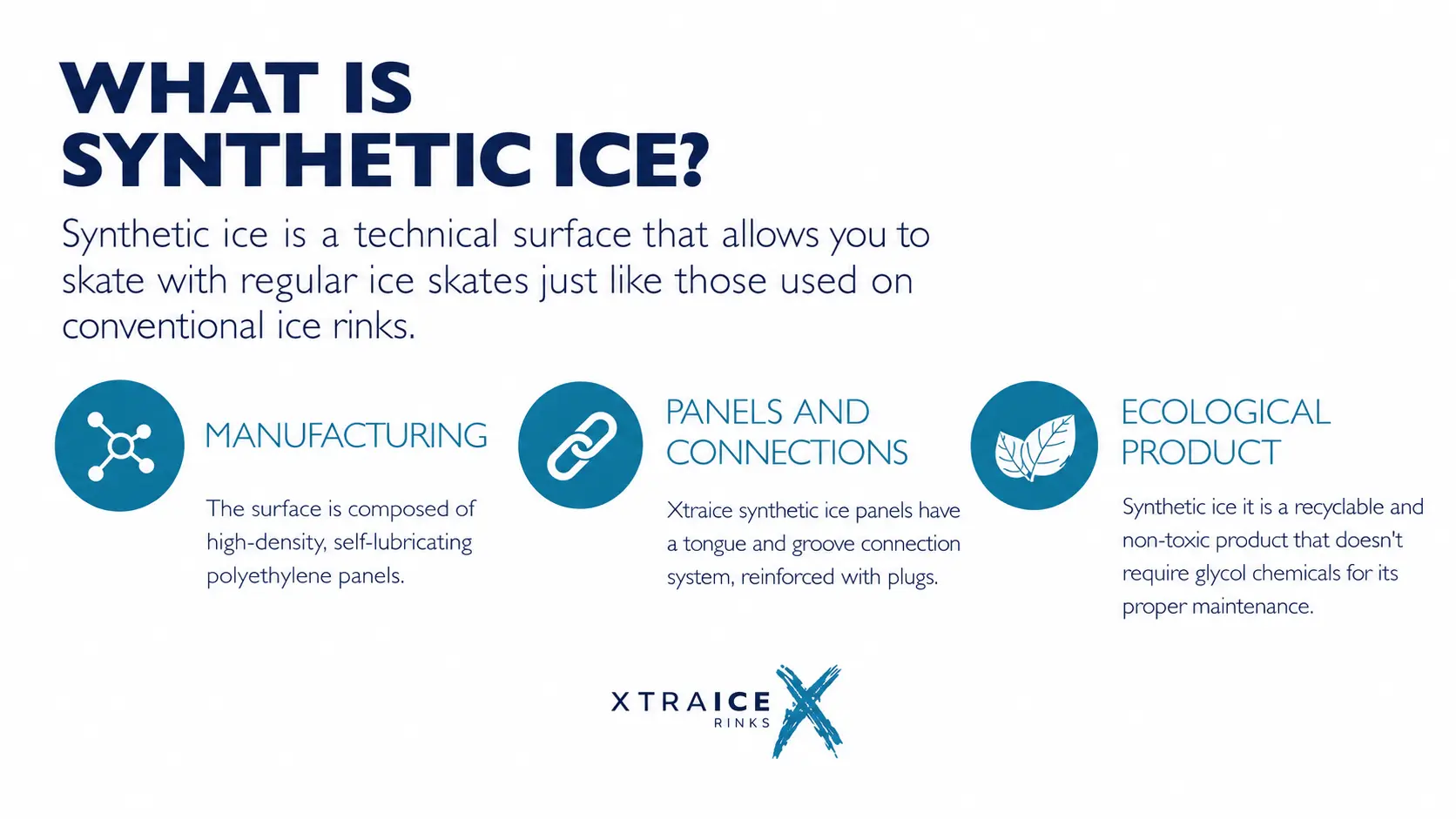
Synthetic ice is an advanced polymer engineering surface designed to skate with traditional steel-blade skates. Made from ultra-high-molecular-weight polyethylene (UHMWPE) panels, it replicates the feel of conventional ice while offering an eco-friendly, durable, energy-free alternative.
How does synthetic ice work? The science of gliding
To understand how eco-friendly or synthetic ice works, you first need to understand the physics behind skating on traditional ice.
On a conventional rink, the blade's friction slightly raises the surface temperature, creating a microscopic film of water that the skater glides on.
In next-generation synthetic ice, that water film is replaced by a mass-injected self-lubrication system.
The key: self-lubricating UHMWPE polyethylene
Not every plastic works for skating. High-end rinks use ultra-high-molecular-weight polyethylene (UHMWPE) with proprietary additives and lubricants injected during the molding process.
Unlike low-quality panels that need surface sprays or waxes:
- Continuous self-lubrication: the lubricant is released gradually as the blade passes over the panel.
- Optimal glide: minimal friction, virtually identical to conventional ice.
- Lower maintenance: no surface substances means no dirt or sticky residue.
Cross-section: the blade gradually releases the lubricant built into the panel itself — no water, no electricity.
The physics of skating: friction, indentation, and shavings
When skating on synthetic ice, three key phenomena take place:
- Friction: the resistance to movement. Xtraice's injected chemical formula reduces friction to the lowest technical level possible to preserve the skater's momentum.
- Indentation: the blade penetrates the polymer slightly, giving the grip needed for turns, stops, and jumps.
- Shavings: as a result of friction and grip, the blade produces fine plastic shavings.
Are synthetic ice shavings dangerous?
There are common concerns about the residue from synthetic ice skating. Xtraice panels use fully inert, harmless additives. The shavings produced are 100% non-toxic, recyclable, and easy to clean with a regular vacuum or broom.
Assembly system: the perfect tongue-and-groove
For a synthetic ice rink to offer a smooth skating experience, the surface must stay perfectly flat with no gaps between panels.

Xtraice uses a high-precision tongue-and-groove connection system:
- Seamless joints: a smooth transition between pieces, preventing blade snags.
- Fast installation: assemble and disassemble the rink without complex tools.
- Expansion absorption: built to withstand extreme temperature changes without warping the surface.
Comparison: Traditional Ice vs. Xtraice Synthetic Ice
Installing a conventional ice rink carries a significant economic and environmental cost. Below is a comparison of the resources needed to maintain a standard 250 m² rink for one month:
| Parameter | Traditional Ice | Xtraice Synthetic Ice | Benefit |
|---|---|---|---|
| Electricity use | 22,500 kWh/month | 0 kWh | 100% savings |
| Water use | 12,500 L/month | 0 L | 100% savings |
| CO₂ emissions | 7 t/month | 0 t | Zero emissions |
| Chemical risk | Glycol refrigerant leaks | No hazardous chemicals | 100% safe |
| Noise | Constant generator noise | Silent | No noise |
| Outdoor use | Weather-limited | 365 days/year | All year round |
Why choose Xtraice synthetic ice
At Xtraice, as synthetic ice manufacturers, we design custom synthetic ice rinks with brand logos and colors embedded directly into the panels. On top of that, Xtraice offers a 12-year warranty on PRO panels, so the profitability of your investment is guaranteed.
If you're still deciding between synthetic and conventional ice, we outline the differences here.
Frequently asked questions about synthetic ice
Does synthetic ice damage skate blades?
It requires slightly more frequent sharpening due to the polymer's density, but it won't damage or nick blades when skating on high-quality self-lubricated UHMWPE panels.
Can a synthetic ice rink be installed outdoors?
Yes. Xtraice panels are UV-treated to withstand direct sunlight, rain, snow, and extreme temperatures without losing their properties or yellowing.
What is the lifespan of a synthetic ice rink?
Depending on panel thickness and usage intensity, a professional-grade rink can last more than 20 years, with reversible panels that let you skate on both sides.
Hi Janice,
thank you for contacting us. One of our agents is going to get in touch with you as soon as possible. Have a good day!
Hi,
I’m wondering how flammable synthetic ice is. I have it on my back deck and I have a charcoal bbq which gets hot. I’m just wondering how much I should buffer the ice. On the small bbq there is about eight inches between the bowl of the bbq and the synthetic ice. I’m less concerned about the big one on wheels and is a few feet off the synthetic ice.
Thanks,
Janice